What Cereals confirmed about onshore wind, farming and the next phase for landowners in England
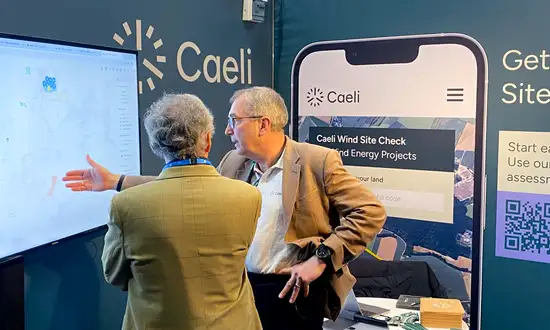
At Cereals, Caeli saw confirmed what is already emerging in the market: onshore wind is becoming relevant again for English farmers. But strong opportunities depend on more than wind potential. Land, grid access, planning context, farming reality, pooling, community confidence and competitive market access all need to come together.

At Cereals this year, one thing was clear: onshore wind is back on the agenda for English farmers.
For us at Caeli, this confirmed what we are already seeing in the market. Onshore wind in England is moving again. But the opportunity is not defined by a wind resource map alone. For landowners, it is a multi-layered decision.
The real question is whether land, grid access, planning context, farming reality, neighbouring interests and route to market can come together in a way that creates a credible, realistic project.
That is where the next phase of onshore wind in England will be decided.
Onshore wind is becoming a farm business question
For many farmers, landowners and land agents, onshore wind is no longer a distant policy discussion. It is becoming part of the wider land-use and income conversation.
That matters at a time when many farm businesses are under pressure from rising costs, changing subsidy structures, volatile markets and the need to think carefully about long-term land value.
But onshore wind should not be treated as a simple additional income stream. A strong opportunity depends on much more than available land and good wind conditions. It depends on whether the site can be assessed properly from the beginning.
That means looking at land viability, grid access, planning context, land rights, environmental constraints, neighbouring landowners, tenants, farm operations and community engagement together – not in isolation.
In England, this is especially important because the market is still taking shape after years of very limited new onshore wind development. There is renewed momentum, but many questions still require expert judgement rather than simple black-and-white answers.

Grid and strategic energy planning are changing how land is viewed
One of the strongest themes in the English onshore wind market is grid. A site can have strong wind potential, committed landowners and enough physical space, but without grid capacity within a viable distance of the site, it may struggle to progress. Conversely, areas where network capacity is expected, planned or becoming available can become attractive very quickly.
At the same time, strategic energy planning is becoming more relevant. Future generation, storage and network needs are increasingly being looked at together. That means regions will be identified where it may be easier to plan and obtain permission to build a wind farm.
The strongest sites will not simply be those with available land. They will be sites where suitable land, strong wind resource, planning potential and grid capacity come together.
That is why early evaluation is helpful. It gives farmers and their advisers a clearer view of whether land is likely to be relevant in this next phase of the market – and what would need to happen before it can be taken seriously by developers.
The farming reality needs to be understood from the beginning
A wind project is never just about the turbine location. On working farms, the practical questions are often more detailed. Where would access tracks go? How would construction affect cropping, drainage or livestock movement? Would cables cross productive land? Are there tenants or other farming arrangements in place? Who is compensated for temporary disruption? How are long-term land use restrictions handled?
These are important details. They can determine whether an opportunity works for the farm business, not just for the energy project. This is also where land agents and rural advisers play an important role. Their clients need to understand not only headline rent, but also operational impact, risk, flexibility and the long-term structure of any agreement.
Pooling can make or break a project
Many onshore wind projects involve more than one landholding.
Even if turbines are located on one owner’s land, surrounding land may still matter for access, spacing, cabling, construction, visibility or planning considerations. That creates a sensitive question: how should value be shared?
This needs to be addressed early or projects become difficult before they have properly started. One landowner may expect most of the value because turbines are located on their land. Another may be essential for access. A third may be affected by constraints or infrastructure but receive little recognition.
This is why a fair and transparent pooling structure is so important. At Caeli, we have developed a mechanism designed to reflect different landowner contributions in a clear and balanced way. The aim is to reduce friction, create transparency and make the overall project structure more credible for everyone involved.
For farmers and land agents, this is one of the reasons not to look at wind potential in isolation. The best site structure may involve several landowners working together from the beginning.

Community benefit and local confidence matter
Local acceptance remains central to any credible onshore wind project. Farmers know their neighbours. They understand the local landscape, local relationships and local concerns. A wind project is very visible. It may raise questions about visual impact, noise, construction traffic, local perception, how benefits are shared and potential disruption.
This is why community engagement cannot be treated as an afterthought. It needs to be considered early and handled clearly.
There are different issues that need to be clearly understood: the landowner’s commercial agreement, compensation for tenants or affected farming operations, agreements with neighbouring landowners, community benefit arrangements, formal planning considerations and local communication.
Keeping these separate helps avoid misunderstandings and allows each question to be addressed properly. It also protects trust. A project that is structured carefully has a better chance of being assessed on its merits.
Speed matters, but preparation matters more
There is momentum in the market.
Policy has changed. Grid reform is changing how projects are given access. Strategic planning is becoming more relevant. Developers are looking again at English onshore wind. In areas where grid capacity becomes available, interest can build quickly.
But speed should not mean pressure.
For farmers, the aim should not be to sign the first agreement placed in front of them. The aim should be to understand the opportunity early enough to make informed choices.
That means knowing whether the land has credible onshore wind potential, what the main constraints are, how grid access might work, whether neighbouring landowners are relevant, whether tenants or farm operations are affected, whether pooling may be needed, what type of developer route could be suitable and what should be clarified before any long-term commitment is made.
This creates optionality. It gives landowners control over the next step rather than leaving them reactive.
What Cereals confirmed for us
Cereals confirmed what we already see in the market: onshore wind in England is entering a new phase. For farmers, landowners and land agents, that phase will not be defined by speculation or headline payments. It will be defined by structured assessment, credible grid access evaluation, clear land rights, practical farming considerations and a responsible route to market.
That means asking the right question early.
Not simply: “Could there be wind turbines here?”
But: “Can this land become part of a well-structured, realistic and responsible onshore wind project?”
At Caeli, this is exactly where we support landowners and their advisers. We bring together land analysis, planning context, grid considerations and market access, helping landowners understand the real potential of their land before taking the next step.
The opportunity is real. But the strongest position for landowners is to understand the land properly, structure the opportunity carefully and bring it to the right market at the right time.
Fair value is created when landowners understand the real potential of their land, structure the opportunity transparently and bring it to a competitive developer market at the right time.